A mismatch between a digital-product listing and its download turns into refunds, support messages, rough reviews, and the feeling that something obvious slipped through. PromiseDiff is a local-first pre-publish check for PDF sellers: paste the listing, upload the PDF or ZIP, and get back what the files support, contradict, or cannot prove.
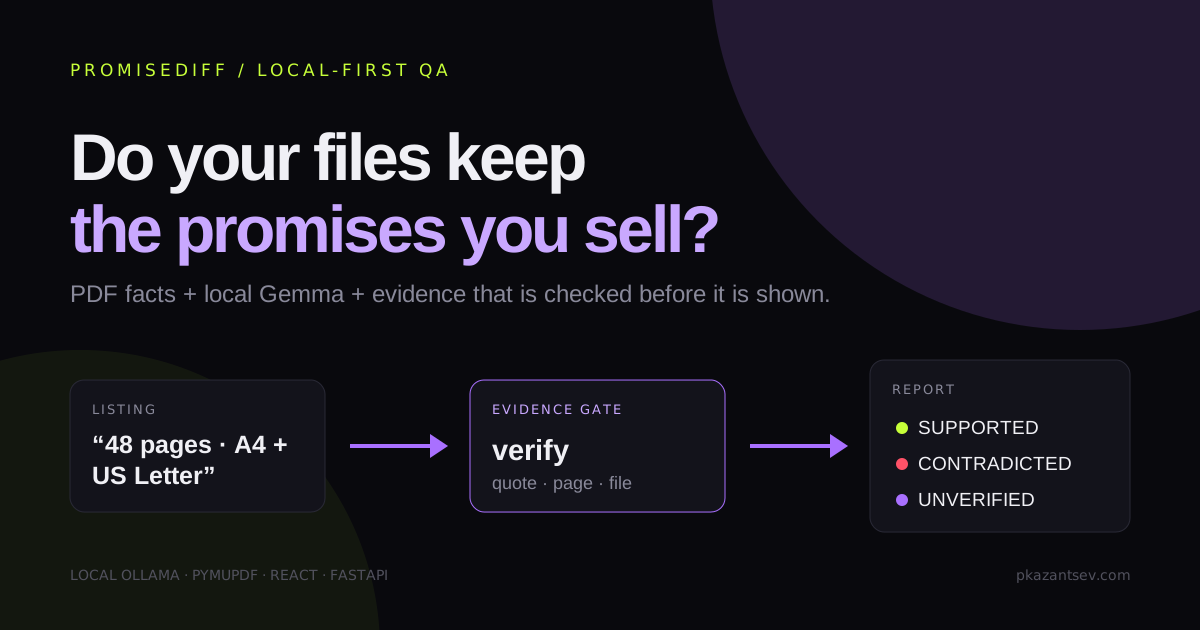
Missing evidence is not a contradiction
This is the rule I cared about most. A scanned document can have no extractable text. A claim can name an ambiguous file. A model can point to a quote that is not actually on the page. None of those proves the seller wrong.
| Result | Meaning |
|---|---|
SUPPORTED | The supplied evidence supports the claim. |
CONTRADICTED | A reproducible check found a conflicting fact. |
UNVERIFIED | The files do not establish the claim either way. |
OUT_OF_SCOPE | The MVP cannot test this kind of claim. |
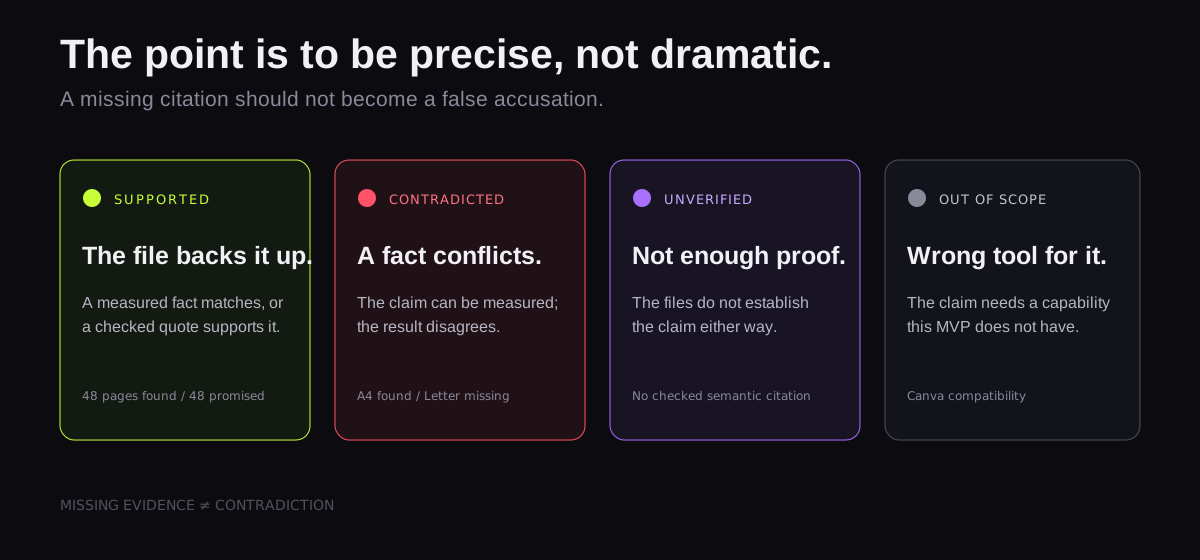
Two evidence paths
Page counts, dimensions, and file inventory are measurements, so PyMuPDF checks them directly. Semantic promises need interpretation: a “debt repayment worksheet” may be called a “Loan Balance Reduction Tracker” in the PDF. For that path, local Gemma through Ollama reads relevant excerpts.
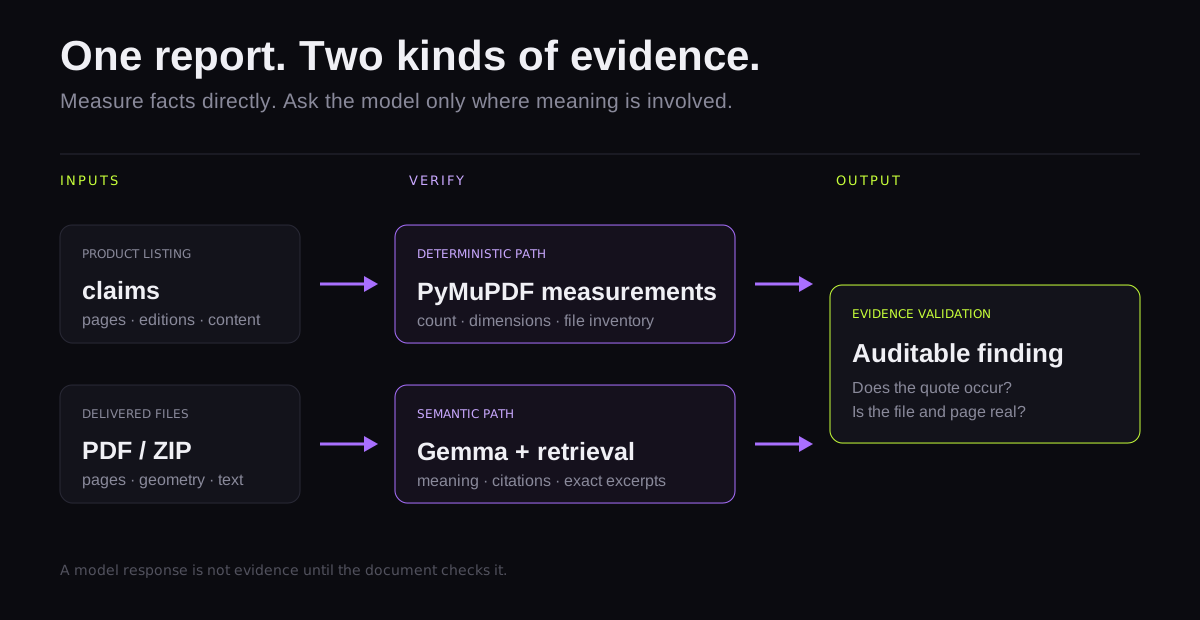
A model answer is not evidence
The model can suggest a result, but cannot certify its own work. A semantic finding becomes supported only when the filename exists, the page exists, and the exact quote occurs in extracted text. Otherwise it remains unverified.
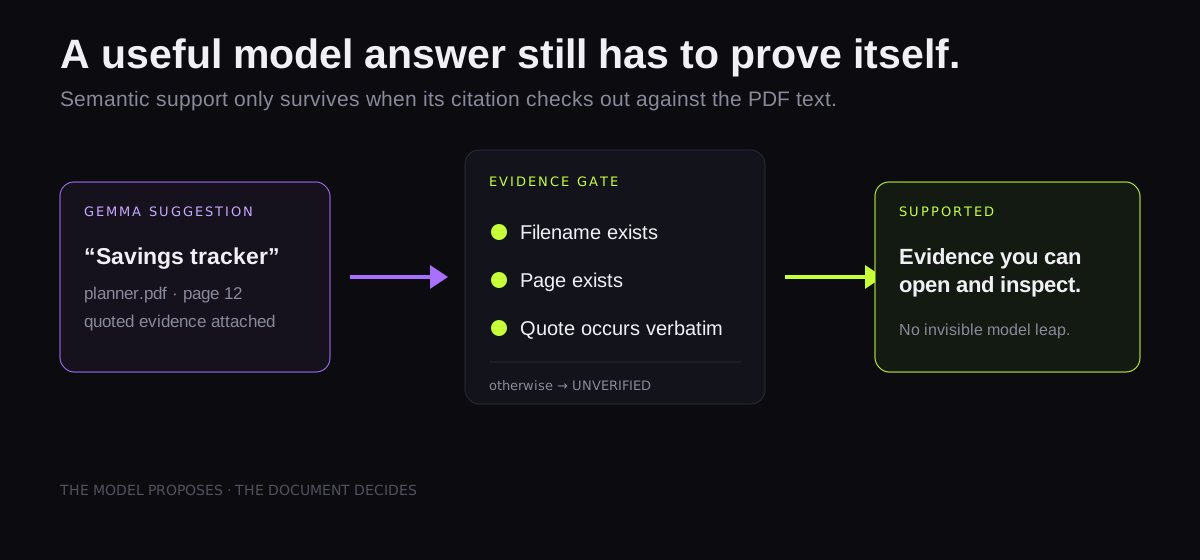
A real mismatch in the demo
The included Budget Planner really has 48 A4 pages and the expected planner content. Its sample listing also promises a US Letter edition. The file does not contain one, so PromiseDiff confirms the page count and flags the missing edition with the measurement retained in the report.
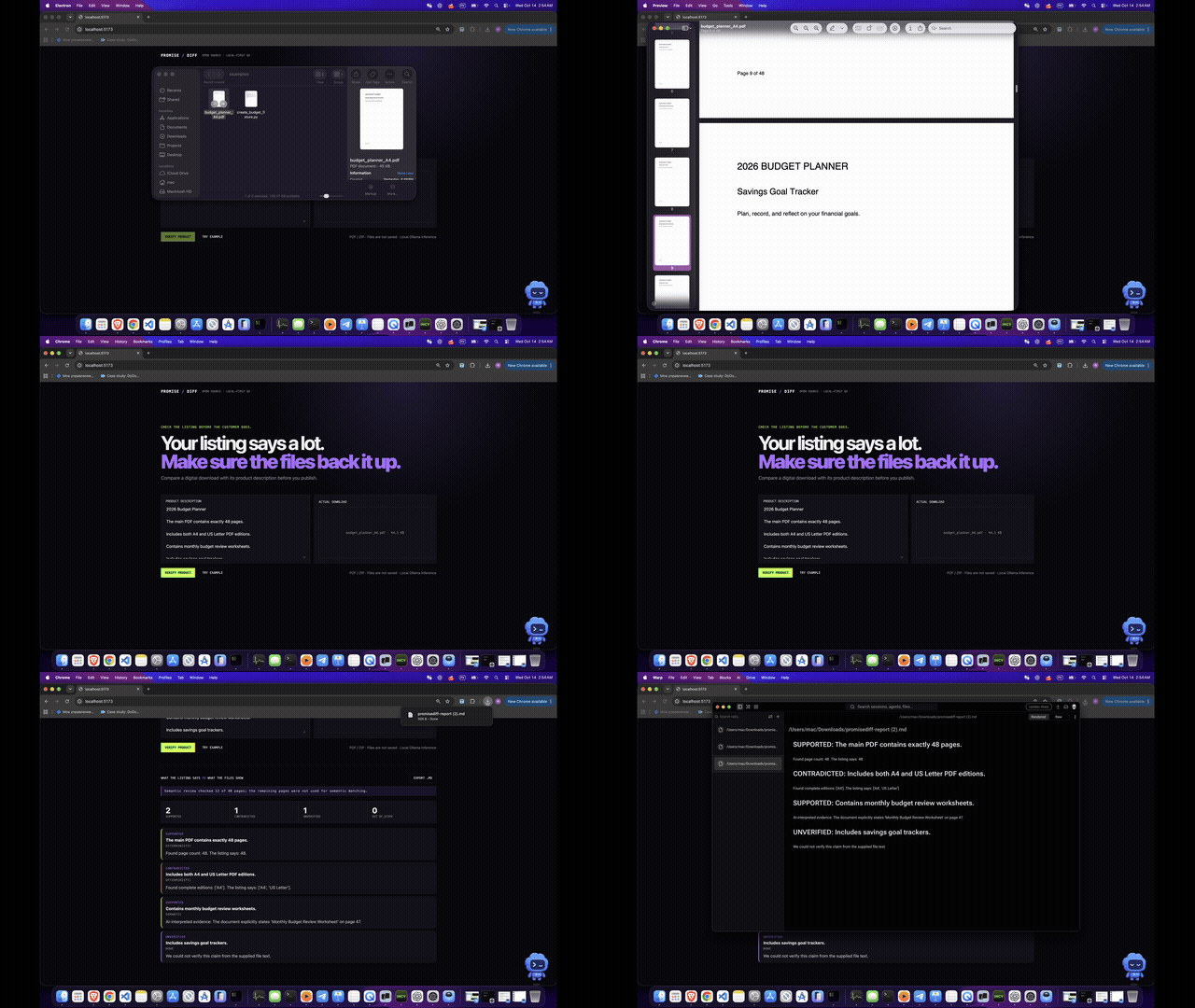
I recorded the walkthrough with ProgressCut, my local-first tool for turning a longer screen recording into a short visual story. They make a useful pair: PromiseDiff checks the release before it ships; ProgressCut helps explain it after it is ready.
Untrusted uploads need a boundary
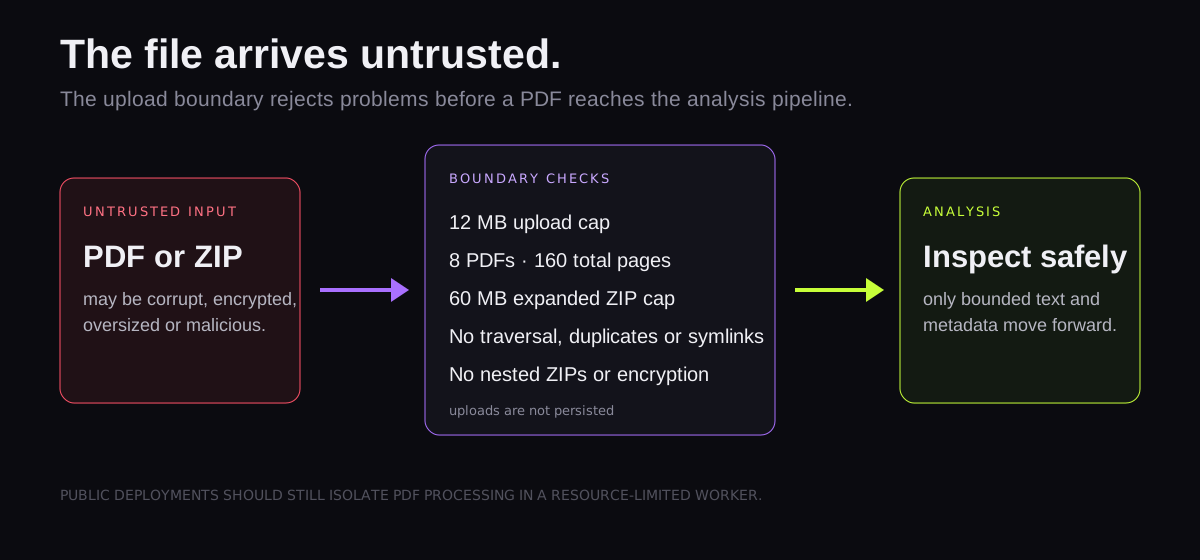
PDFs and ZIPs arrive untrusted. The backend caps upload size, PDF count, page count, expanded ZIP size, and extracted text; it rejects traversal paths, duplicate entries, symlinks, encryption, nested archives, and suspicious compression.
A small benchmark, including the miss
Ten independently labelled synthetic cases run through the same local API as the UI. The runner saves raw responses and timings rather than manufacturing a headline score afterwards.
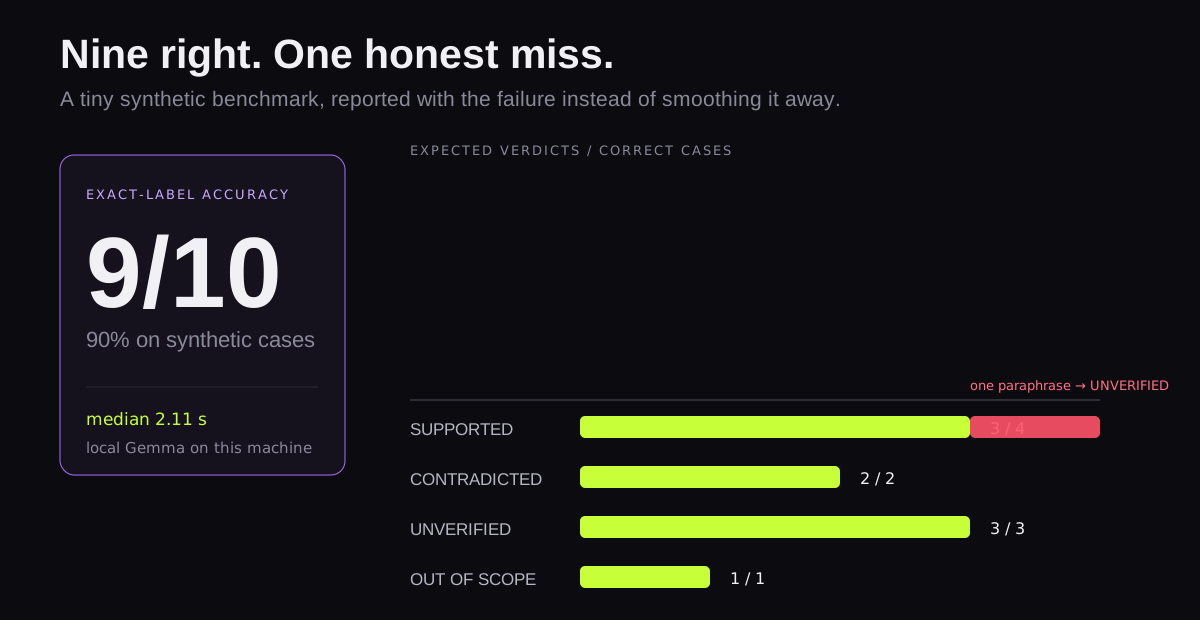
| Metric | Result | Boundary |
|---|---|---|
| Exact-label accuracy | 90% (9/10) | Tiny synthetic evaluation. |
| Contradiction precision / recall | 100% (2/2) | Measured facts only. |
| Supported recall | 75% (3/4) | One paraphrase stayed unverified. |
| Median API latency | 2.11 s | Local Gemma on this machine. |
The miss matters: “debt repayment worksheet” was not promoted to support for “Loan Balance Reduction Tracker” because the evidence was not strong enough. Better paraphrase retrieval is next; the rule stays the same—when the file cannot establish a claim, say so.